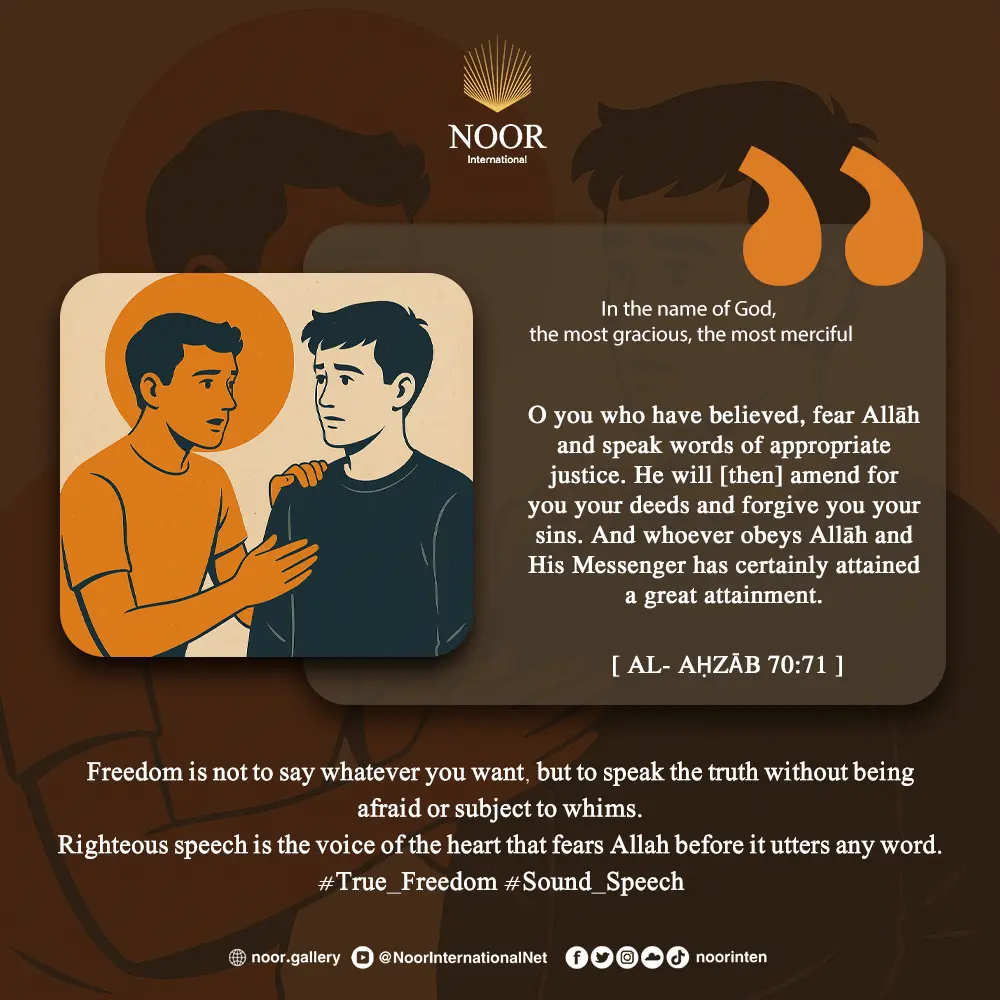











Freedom is not to say whatever you want, but to speak the truth without being afraid or subject to whims.
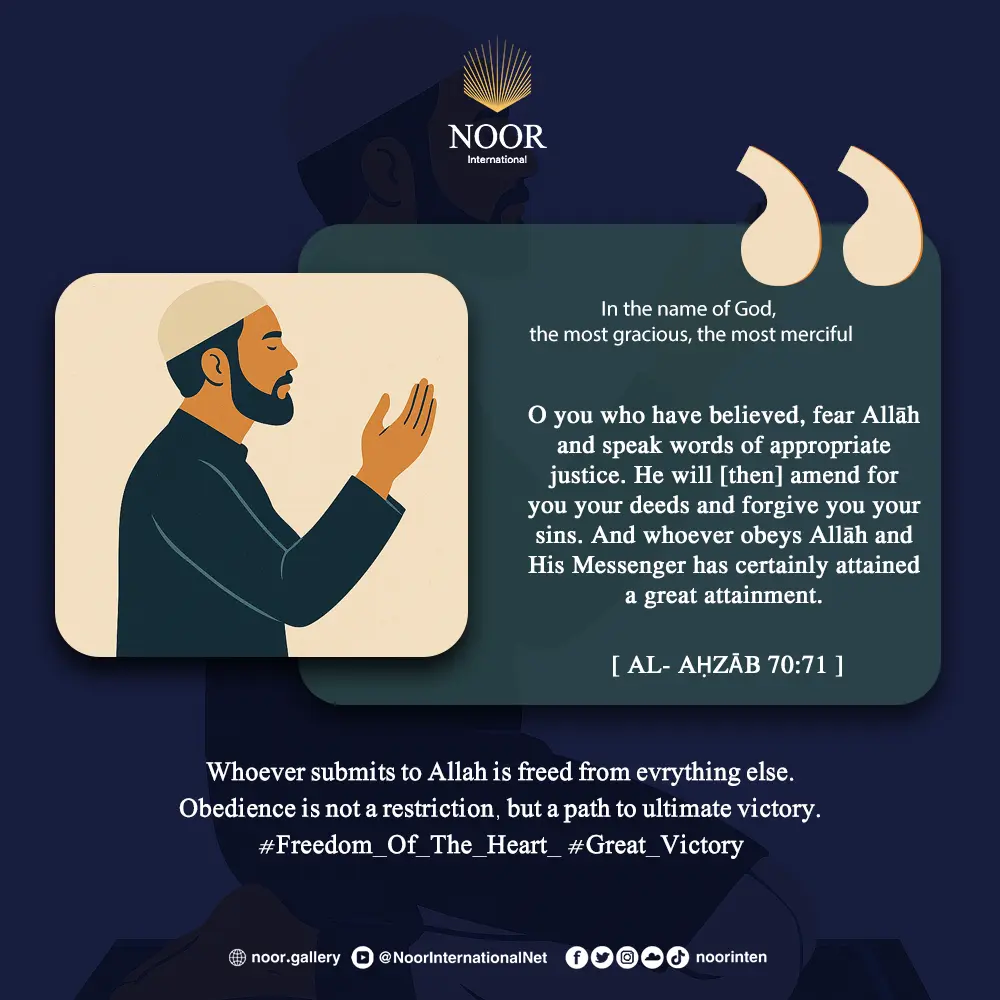
Obedience is not a restriction, but a path to ultimate victory.
Freedom in the Quran
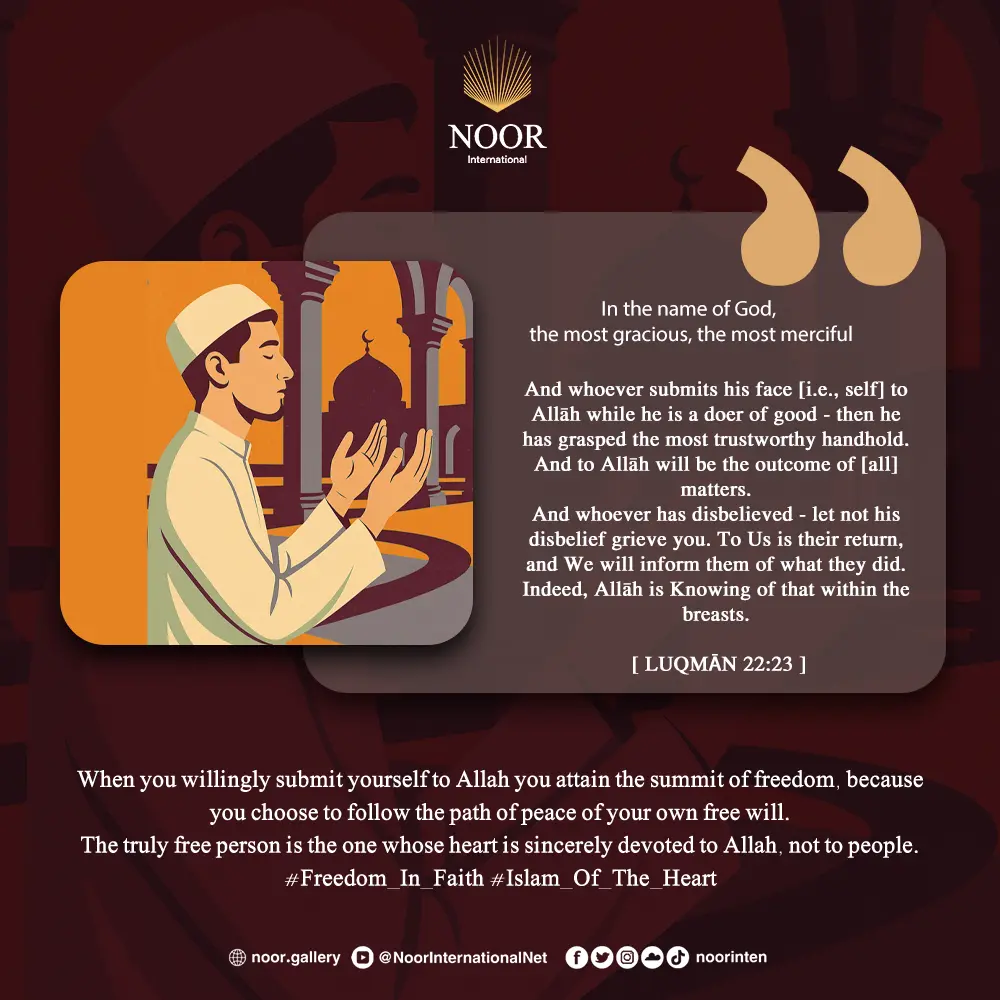
When you willingly submit yourself to Allah you attain the summit of freedom, because you choose to follow the path of peace of your own free will.
The truly free person is the one whose heart is sincerely devoted to Allah, not to people.
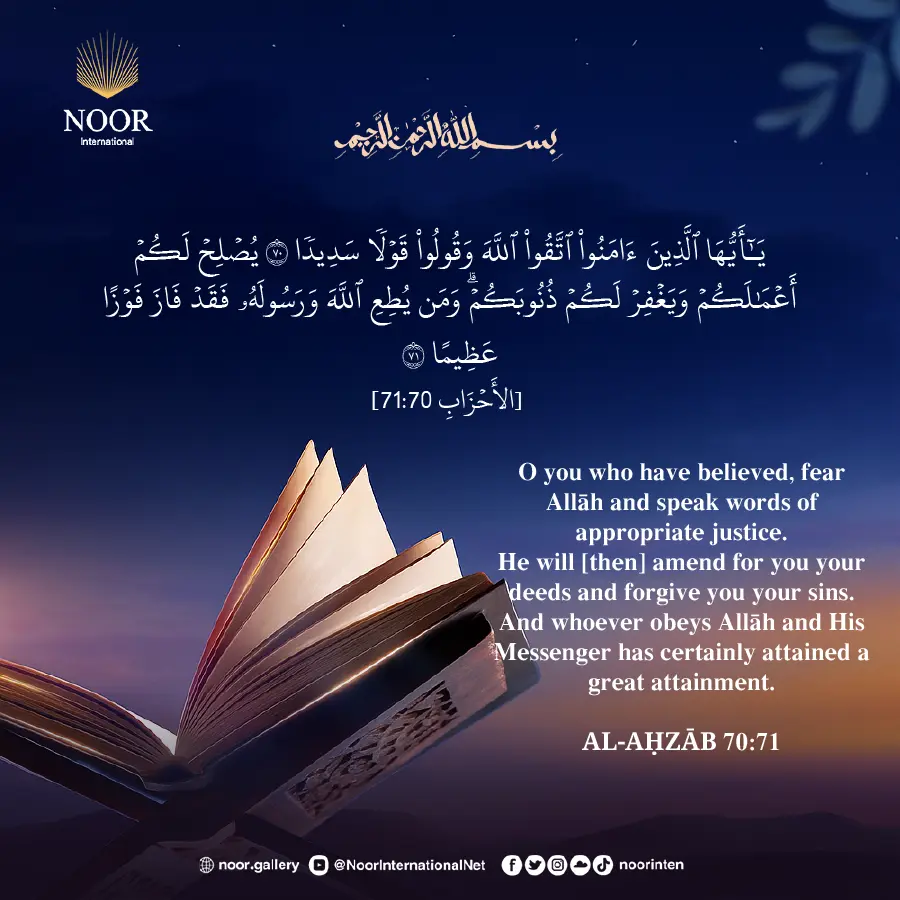
70. “O you who have believed, fear Allah and speak words of appropriate justice.
71. He will [then] amend for you your deeds and forgive you your sins.
And whoever obeys Allah and His Messenger has certainly attained
a great attainment.” (Al- Ahzab: 70-71)
Freedom is not to say whatever you want, but to speak the truth without being afraid or subject to whims.
Righteous speech is the voice of the heart that fears Allah before it utters any word.
70. “O you who have believed, fear Allah and speak words of appropriate justice.
71. He will [then] amend for you your deeds and forgive you your sins.
And whoever obeys Allah and His Messenger has certainly attained
a great attainment.” (Al- Ahzab: 70-71)
Whoever submits to Allah is freed from evrything else.
Obedience is not a restriction, but a path to ultimate victory.
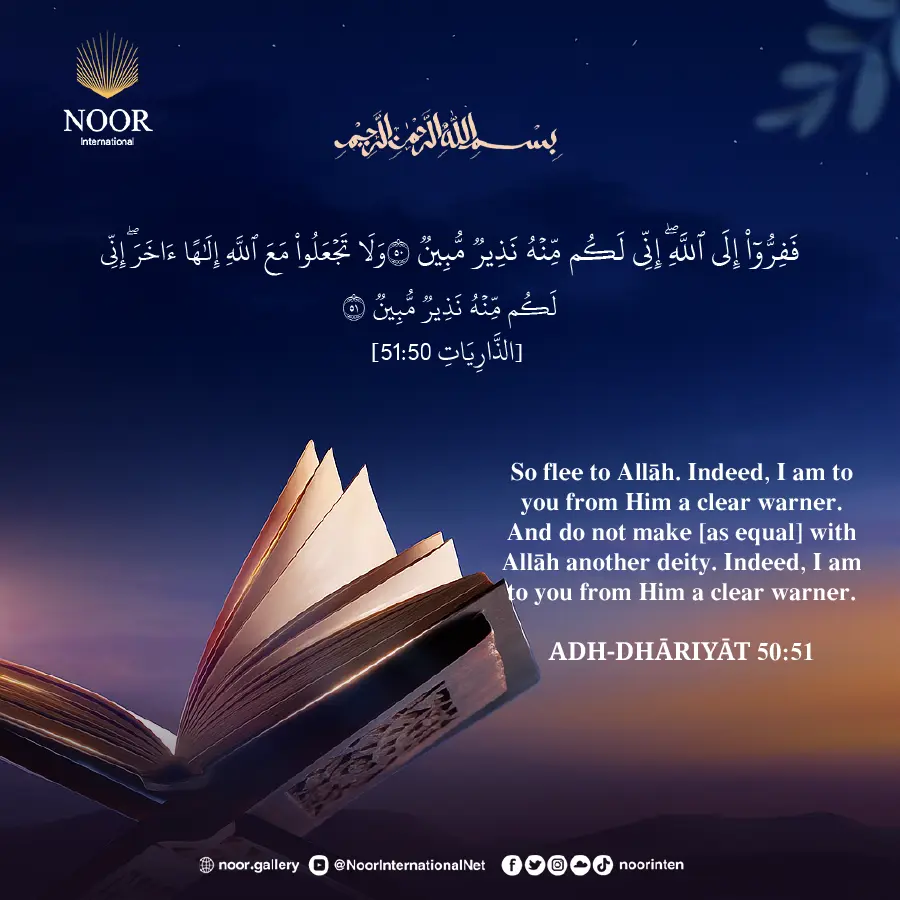
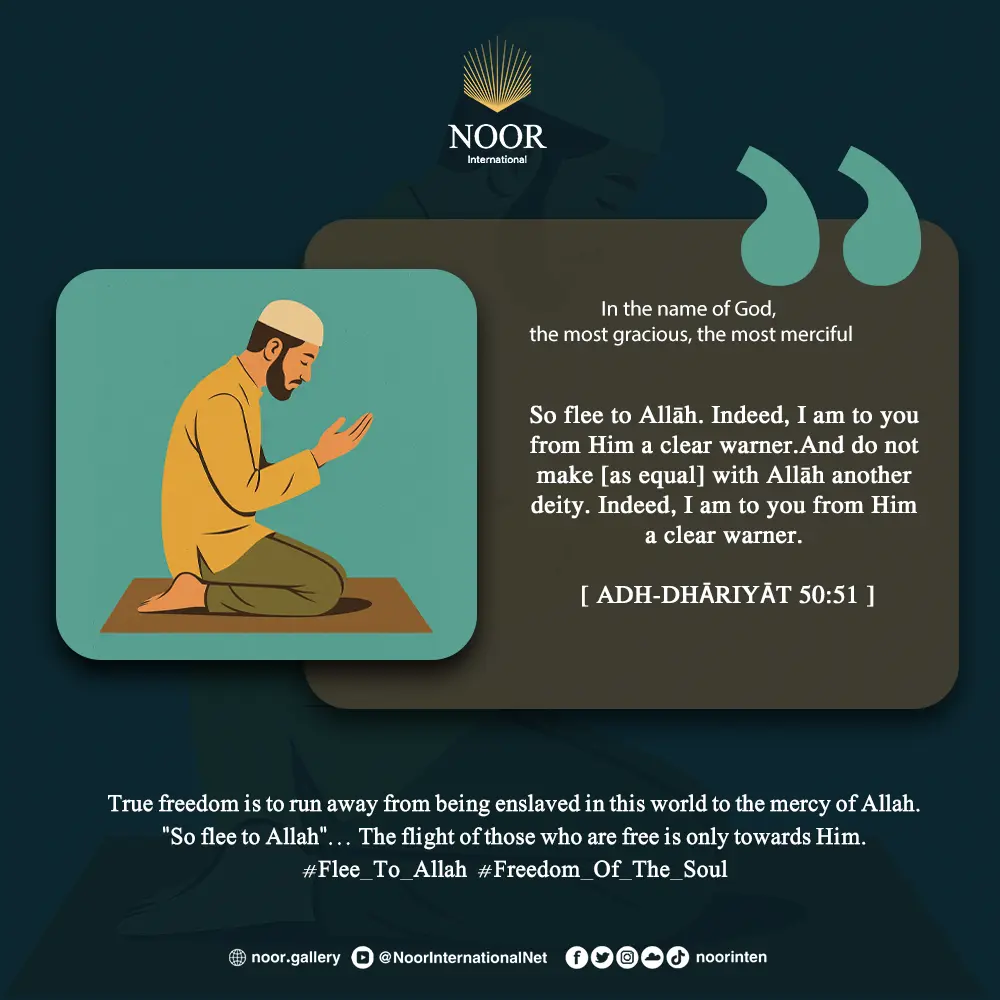
50. “So flee to Allah. Indeed, I am to you from Him a clear warner.
51. And do not make [as equal] with Allah another deity. Indeed, I am
to you from Him a clear warner.”
(Adh-Dhariyat: 50-51)
True freedom is to run away from being enslaved in this world to the mercy of Allah.
"So flee to Allah"… The flight of those who are free is only towards Him.
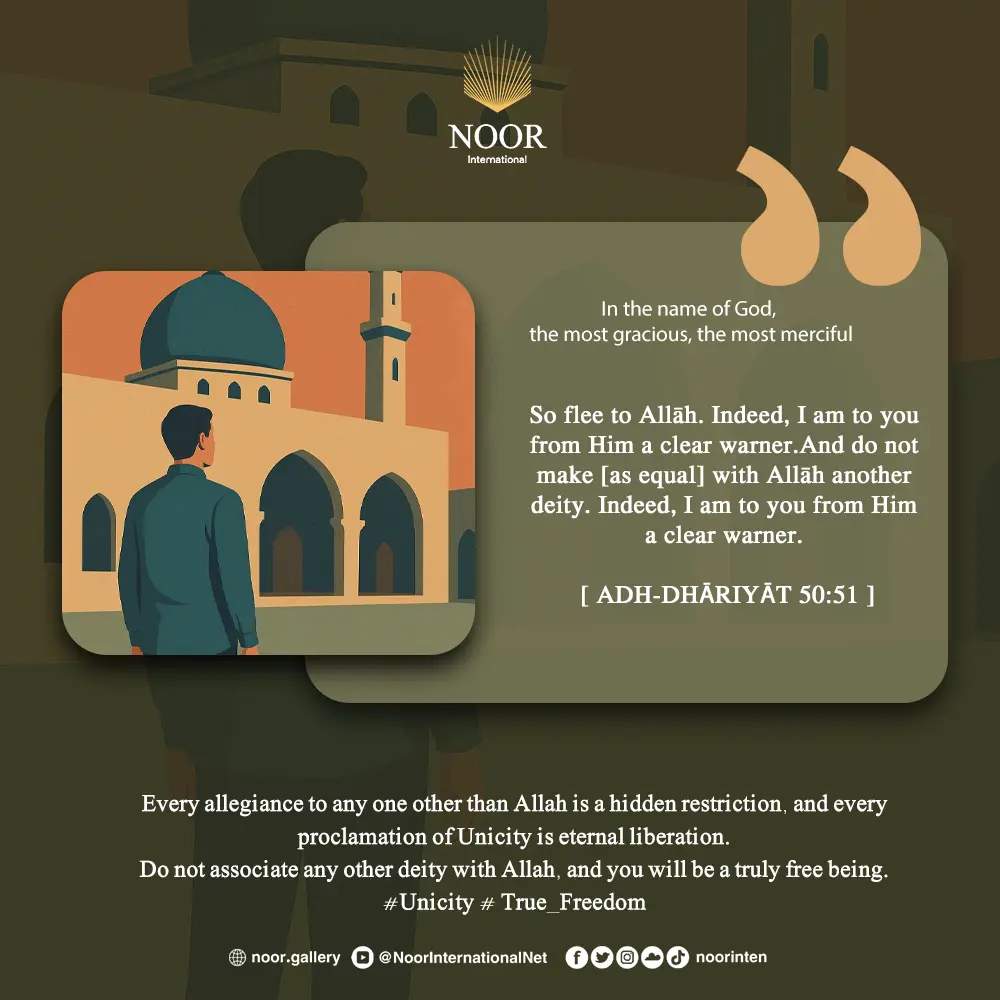
50. “So flee to Allah. Indeed, I am to you from Him a clear warner.
51. And do not make [as equal] with Allah another deity. Indeed, I am
to you from Him a clear warner.”
(Adh-Dhariyat: 50-51)
Every allegiance to any one other than Allah is a hidden restriction, and every proclamation of Unicity is eternal liberation.
Do not associate any other deity with Allah, and you will be a truly free being.
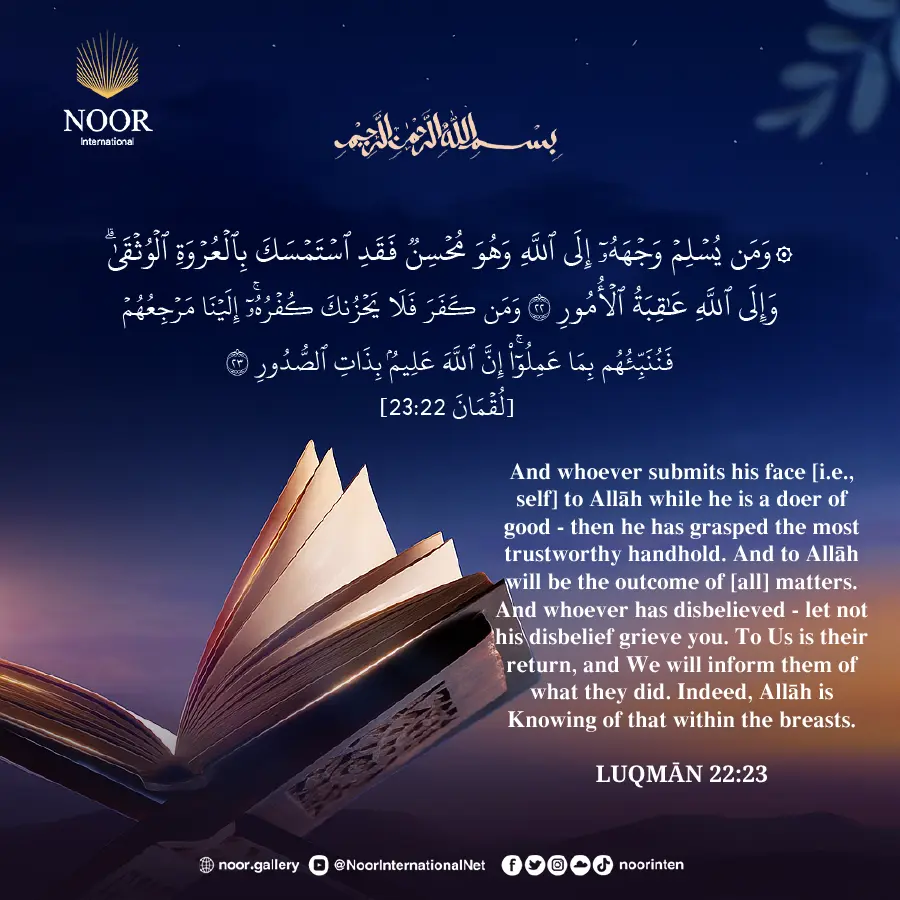
22. “And whoever submits his face [i.e., self] to Allah while he is a doer
of good – then he has grasped the most trustworthy handhold. And to Allah will be the outcome of [all] matters.
23. And whoever has disbelieved – let not his disbelief grieve you. To Us is their return, and We will inform them of what they did. Indeed, Allah is Knowing of that within the breasts.”(Luqman: 22-23)
When you willingly submit yourself to Allah you attain the summit of freedom, because you choose to follow the path of peace of your own free will.
The truly free person is the one whose heart is sincerely devoted to Allah, not to people.
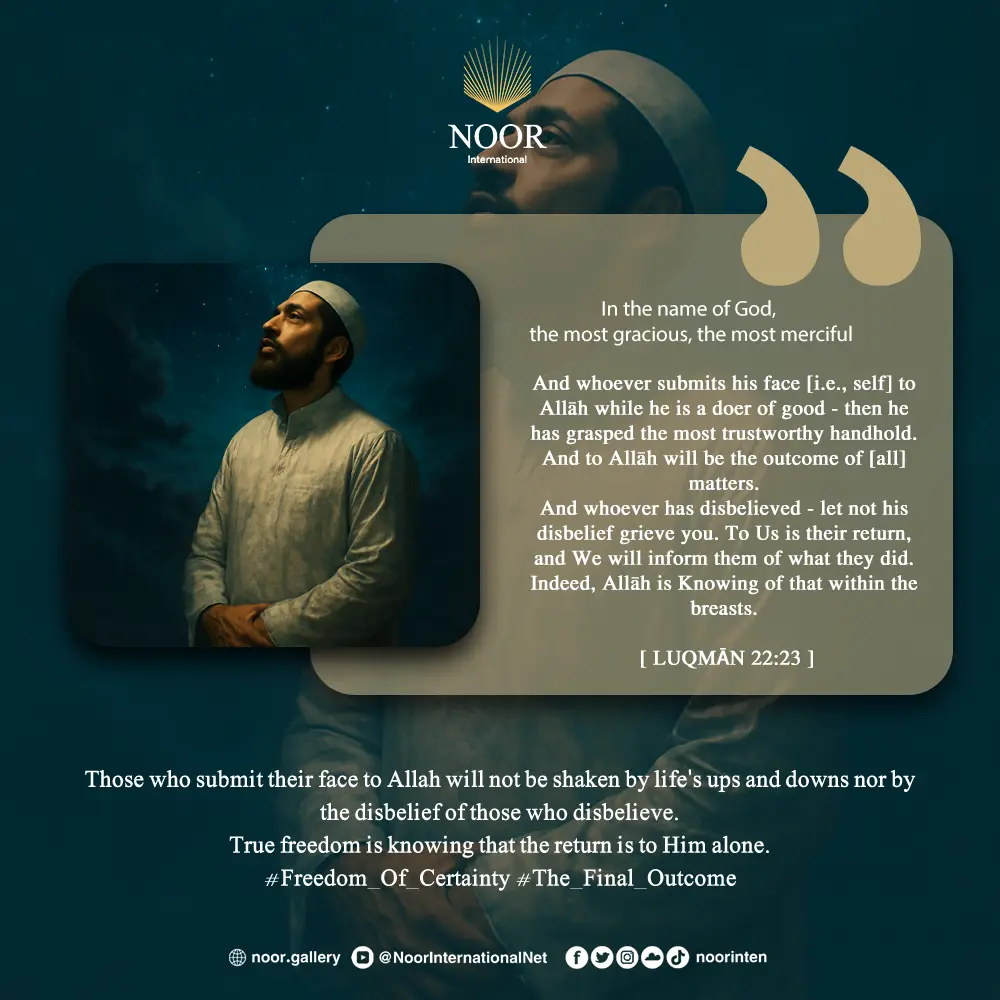
22. “And whoever submits his face [i.e., self] to Allah while he is a doer
of good – then he has grasped the most trustworthy handhold. And to Allah will be the outcome of [all] matters.
23. And whoever has disbelieved – let not his disbelief grieve you. To Us is their return, and We will inform them of what they did. Indeed, Allah is Knowing of that within the breasts.”(Luqman: 22-23)
Those who submit their face to Allah will not be shaken by life's ups and downs nor by the disbelief of those who disbelieve.
True freedom is knowing that the return is to Him alone.
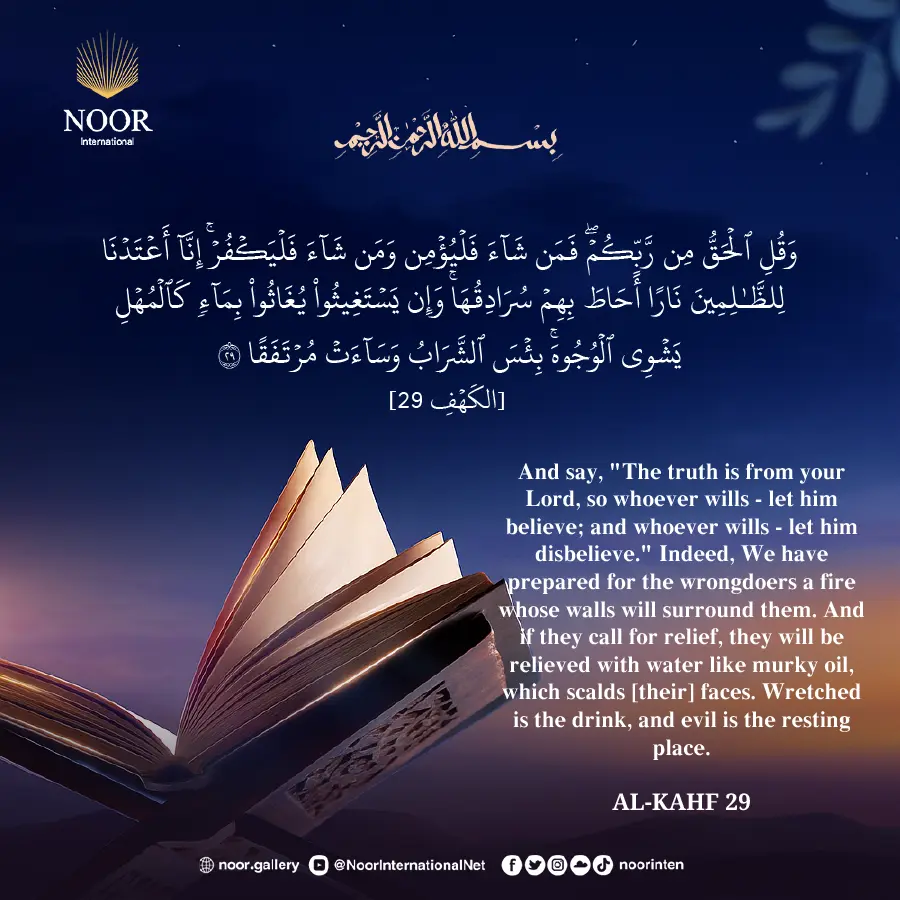
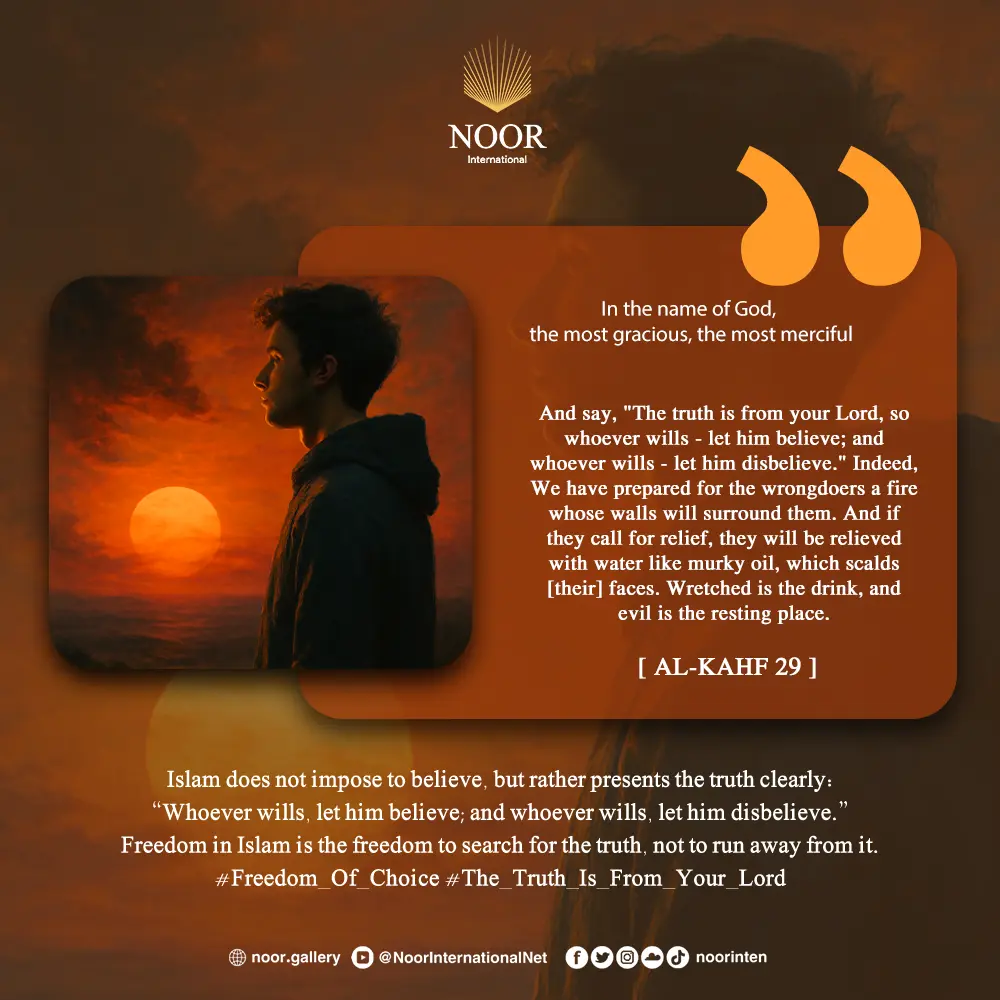
29. And say, “The truth is from your Lord, so whoever wills – let him
believe; and whoever wills – let him disbelieve.” Indeed, We have
prepared for the wrongdoers a fire whose walls will surround them.
And if they call for relief, they will be relieved with water like murky oil, which scalds [their] faces. Wretched is the drink, and evil is the resting place. (Al Kahf: 29)
Islam does not impose to believe, but rather presents the truth clearly:
“Whoever wills, let him believe; and whoever wills, let him disbelieve.”
Freedom in Islam is the freedom to search for the truth, not to run away from it.
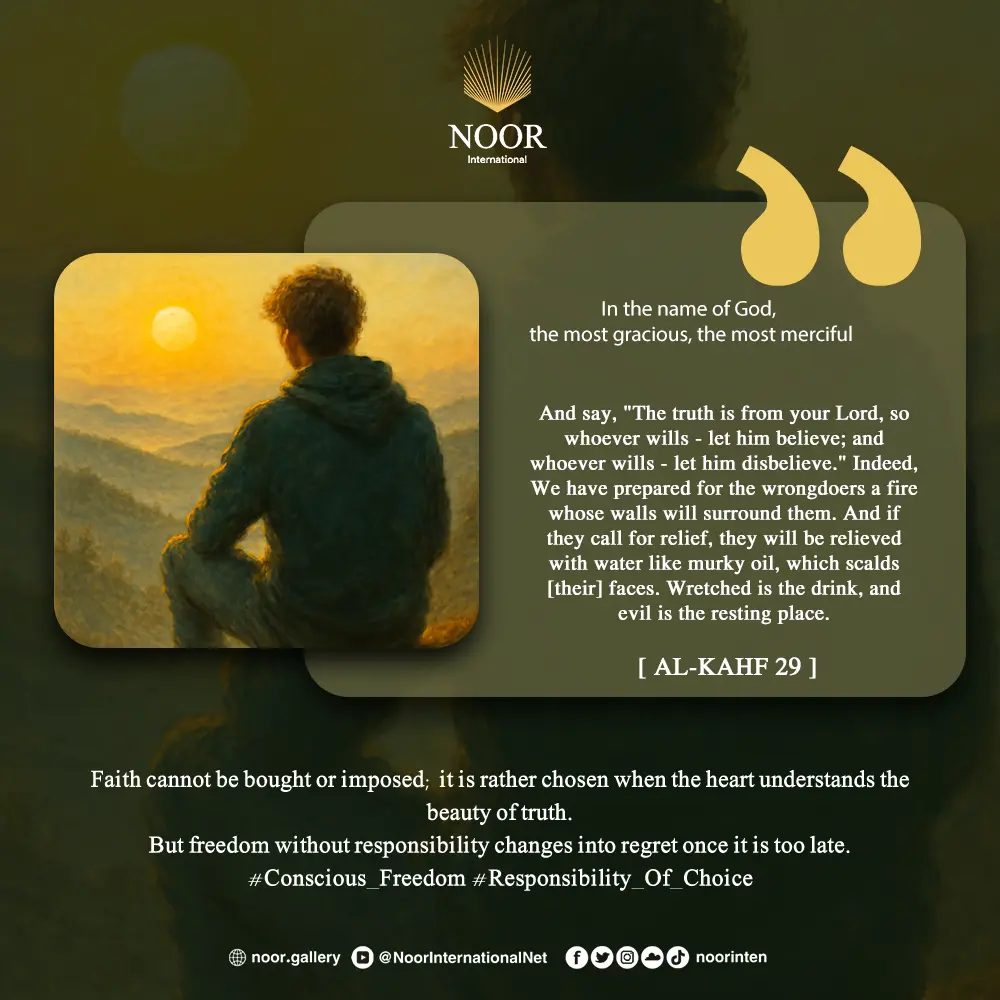
29. And say, “The truth is from your Lord, so whoever wills – let him
believe; and whoever wills – let him disbelieve.” Indeed, We have
prepared for the wrongdoers a fire whose walls will surround them.
And if they call for relief, they will be relieved with water like murky oil, which scalds [their] faces. Wretched is the drink, and evil is the resting place. (Al Kahf: 29)
Faith cannot be bought or imposed; it is rather chosen when the heart understands the beauty of truth.
But freedom without responsibility changes into regret once it is too late.
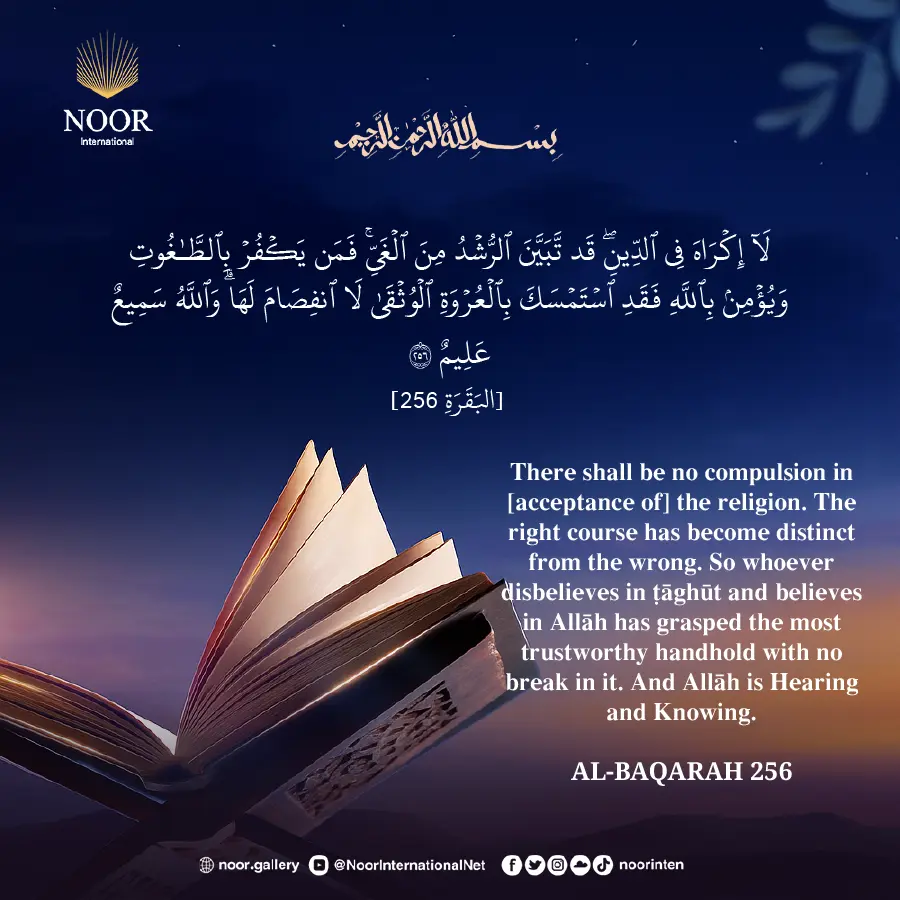
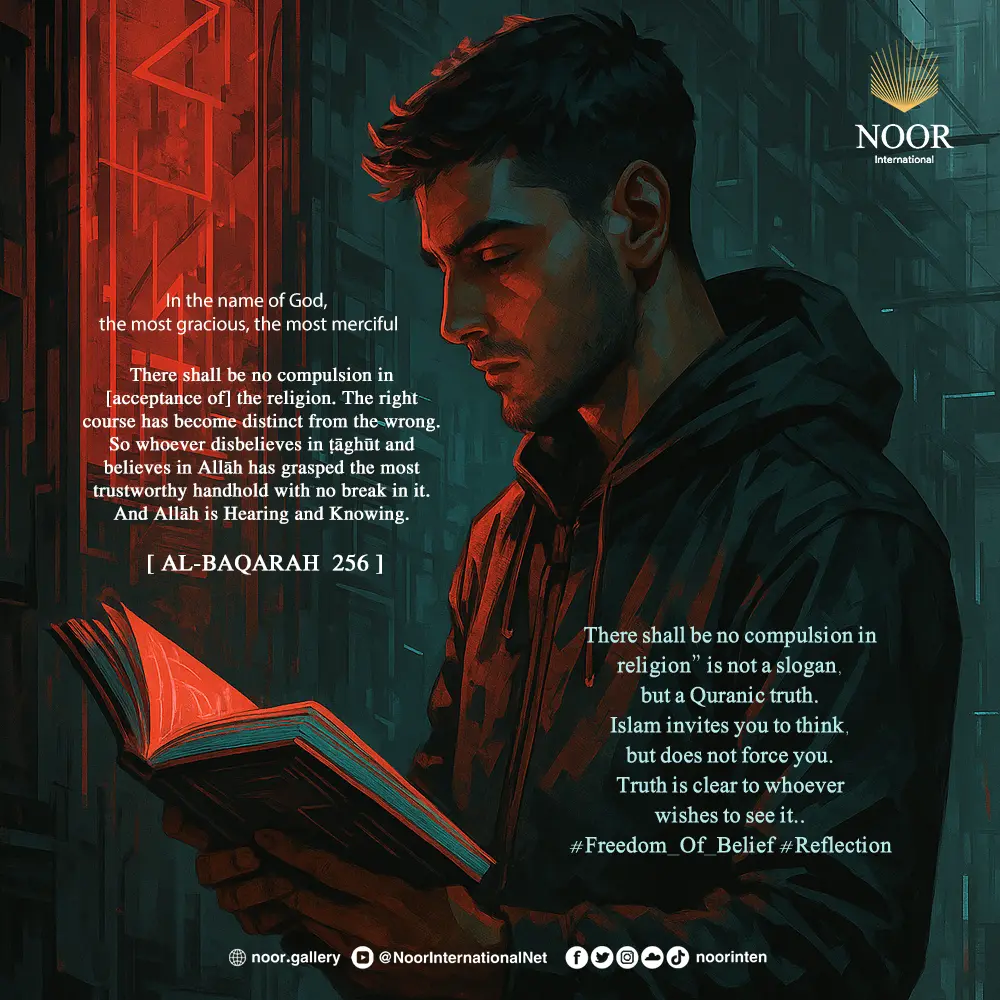
256. “There shall be no compulsion in [acceptance of] the religion. The
right course has become distinct from the wrong. So whoever disbelieves in ṭāghūt and believes in Allah has grasped the most trustworthy handhold with no break in it. And Allah is Hearing and Knowing.” (Al Baqarah: 256)
“There shall be no compulsion in religion” is not a slogan, but a Quranic truth.
Islam invites you to think, but does not force you.
Truth is clear to whoever wishes to see it..
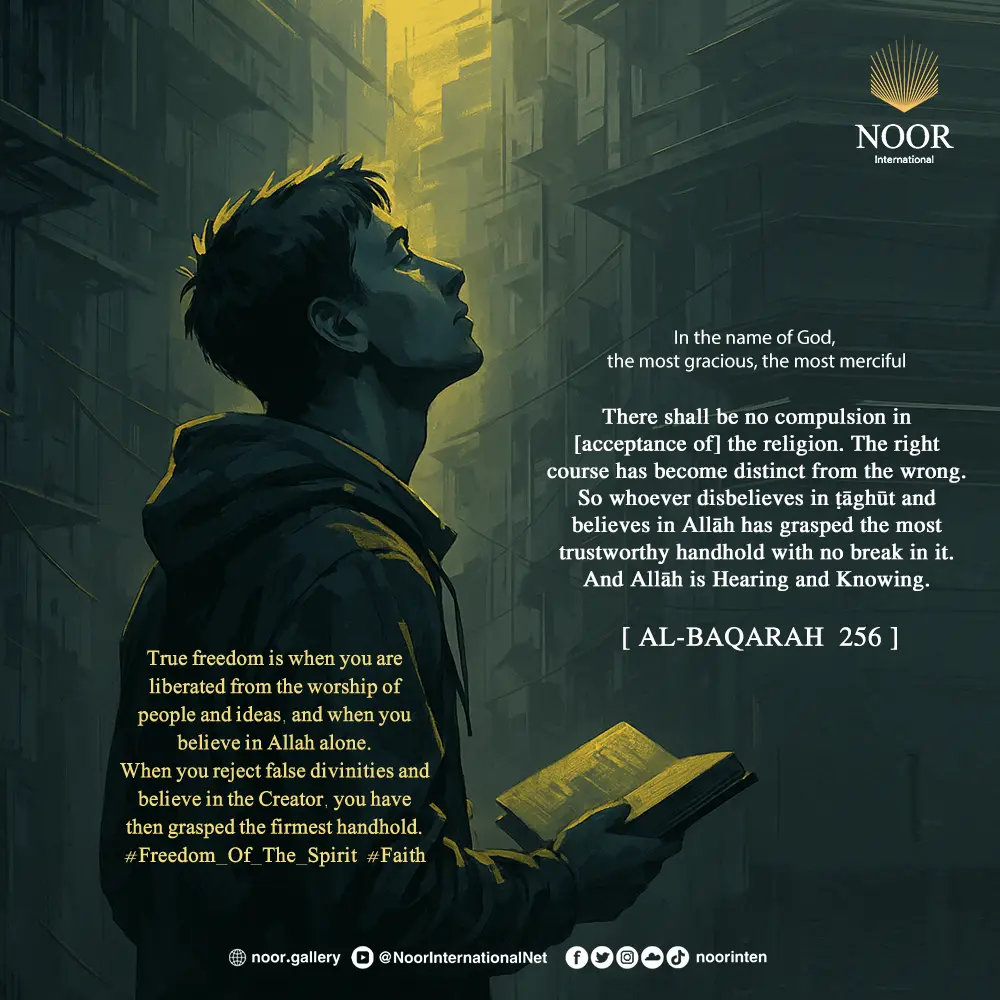
256. “There shall be no compulsion in [acceptance of] the religion. The
right course has become distinct from the wrong. So whoever disbelieves in ṭāghūt and believes in Allah has grasped the most trustworthy handhold with no break in it. And Allah is Hearing and Knowing.” (Al Baqarah: 256)
True freedom is when you are liberated from the worship of people and ideas, and when you believe in Allah alone.
When you reject false divinities and believe in the Creator, you have then grasped the firmest handhold.
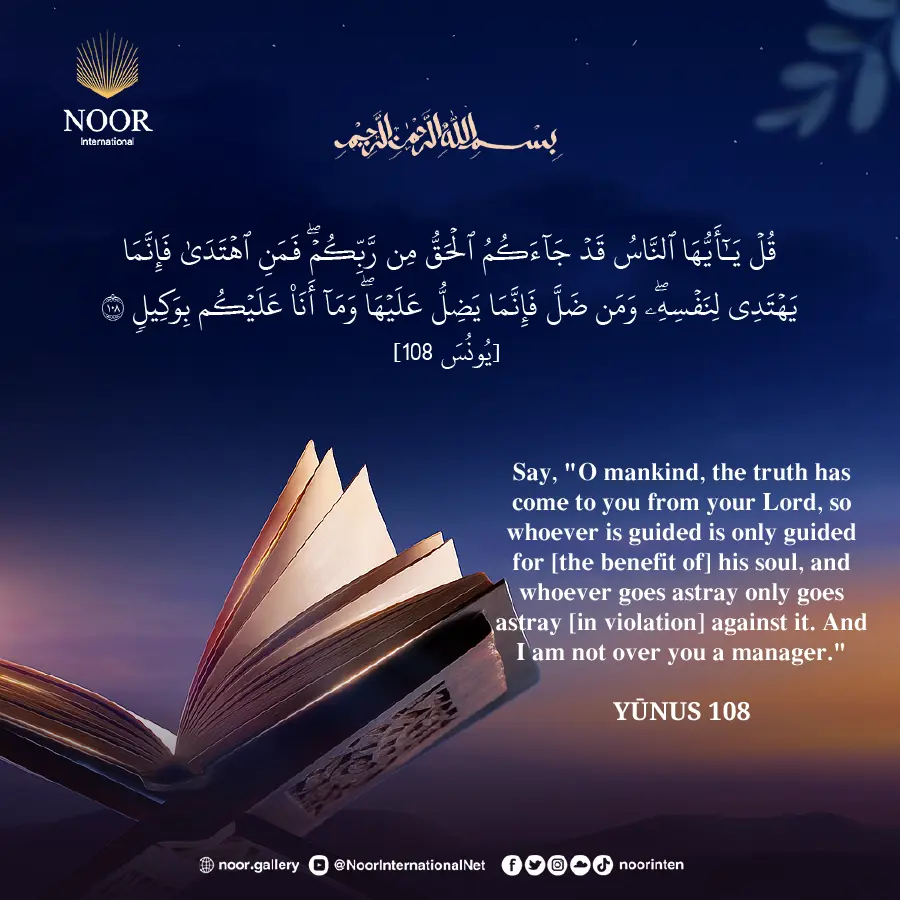
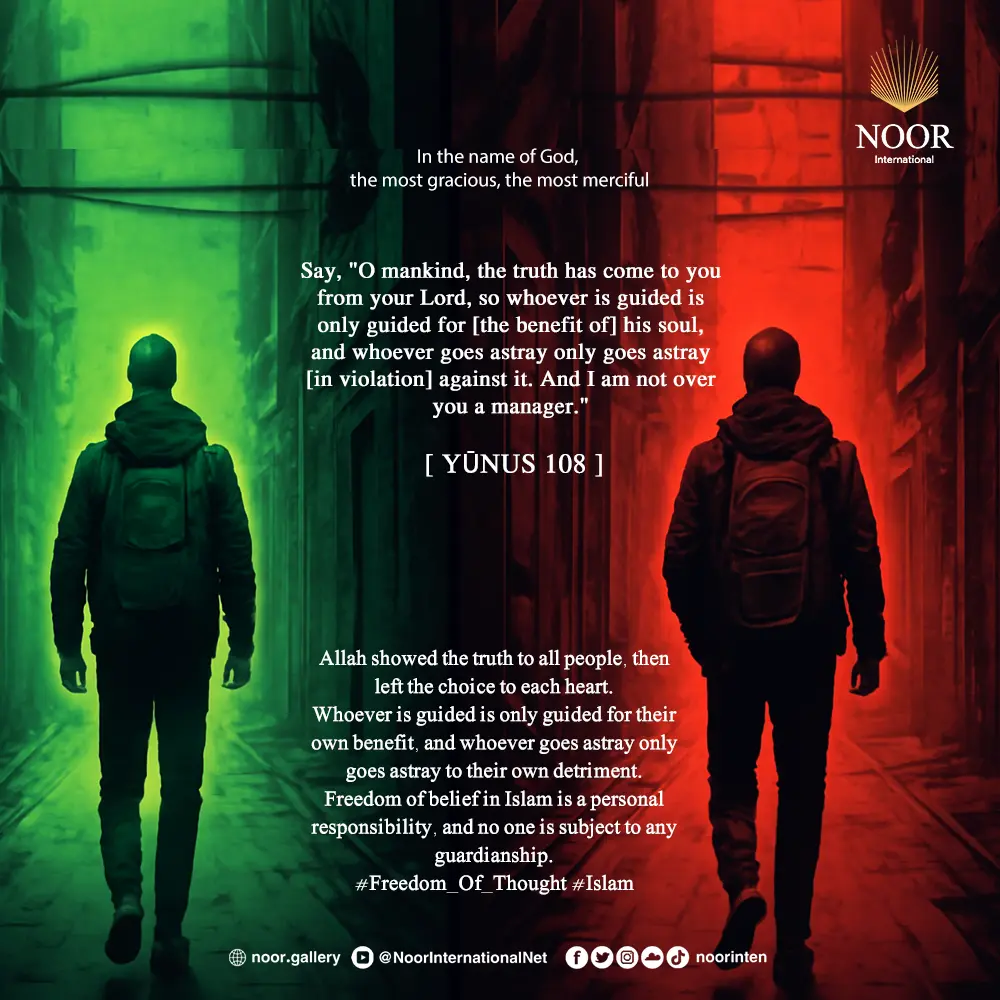
“O mankind, the truth has come to you from your Lord, so
whoever is guided is only guided for [the benefit of] his soul, and whoever goes astray only goes astray [in violation] against it. And I am not over you a manager.” (Yunus:108)
Allah showed the truth to all people, then left the choice to each heart.
Whoever is guided is only guided for their own benefit, and whoever goes astray only goes astray to their own detriment.
Freedom of belief in Islam is a personal responsibility, and no one is subject to any guardianship.
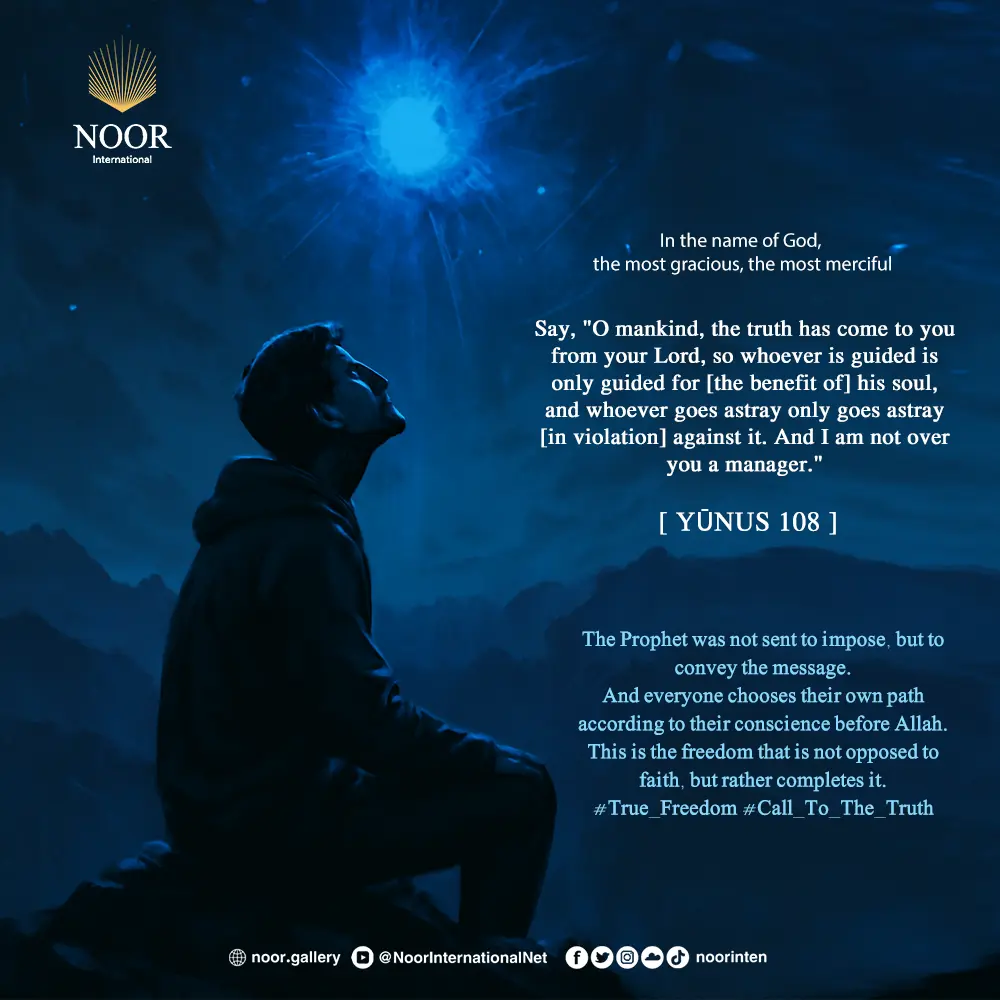
“O mankind, the truth has come to you from your Lord, so
whoever is guided is only guided for [the benefit of] his soul, and whoever goes astray only goes astray [in violation] against it. And I am not over you a manager.” (Yunus:108)
The Prophet was not sent to impose, but to convey the message.
And everyone chooses their own path according to their conscience before Allah.
This is the freedom that is not opposed to faith, but rather completes it.
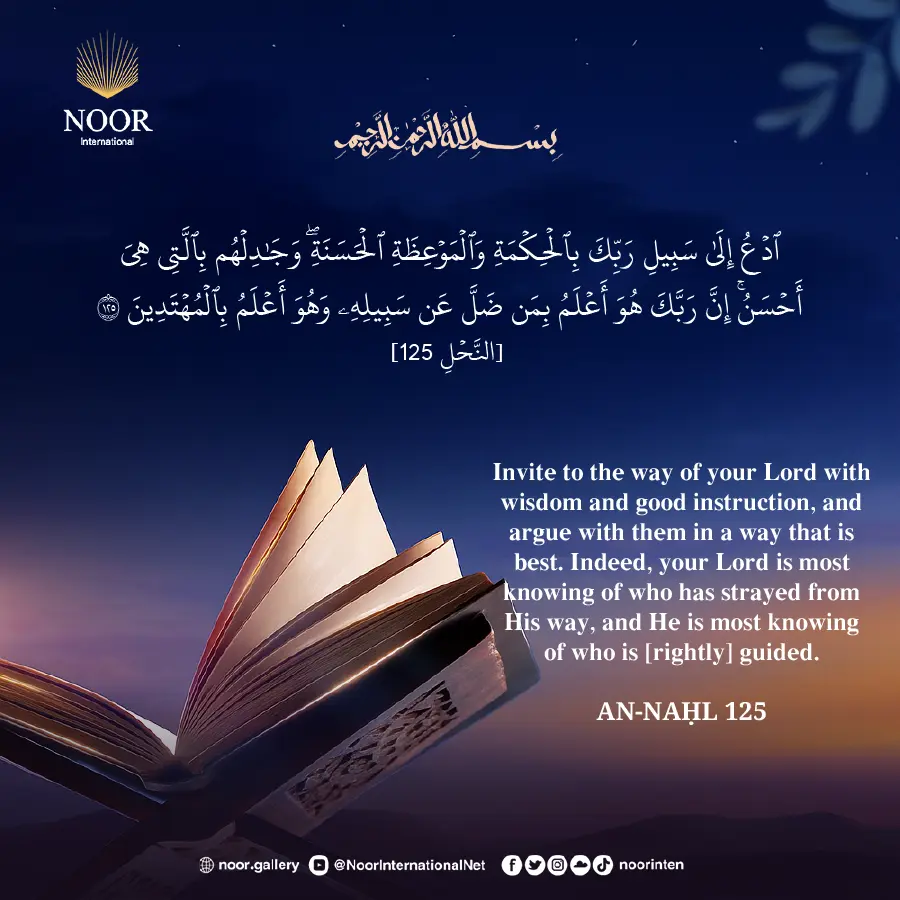
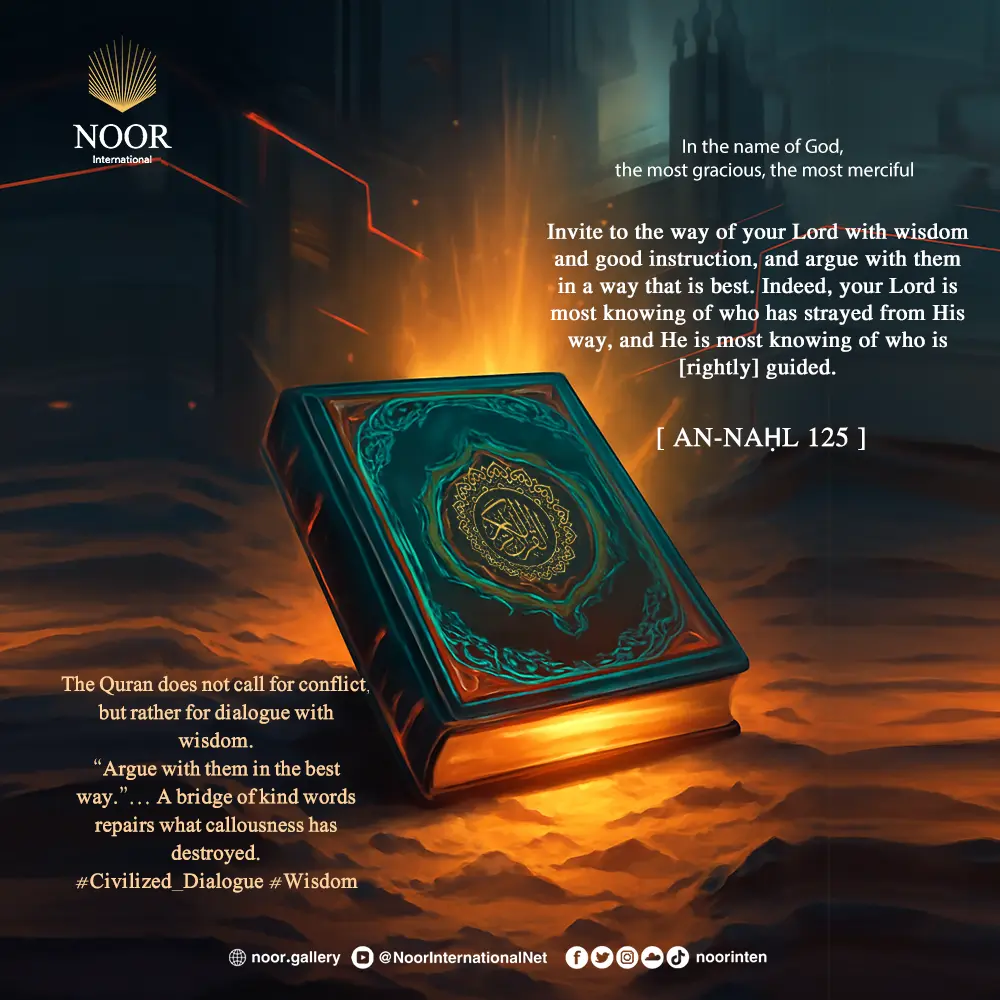
125. “Invite to the way of your Lord with wisdom and good instruction,
and argue with them in a way that is best. Indeed, your Lord is most
knowing of who has strayed from His way, and He is most knowing of who is [rightly] guided.” (An-Nahl:125)
The Quran does not call for conflict, but rather for dialogue with wisdom.
“Argue with them in the best way.”… A bridge of kind words repairs what callousness has destroyed.
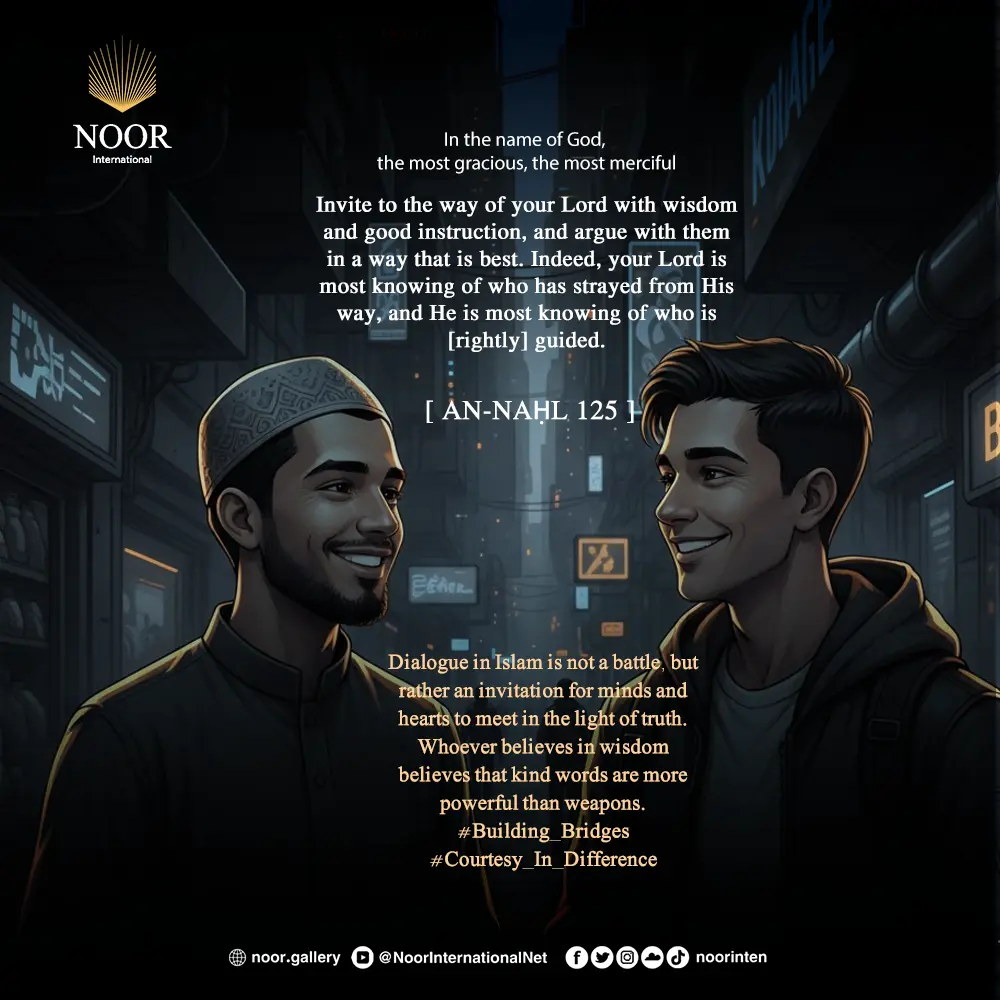
125. “Invite to the way of your Lord with wisdom and good instruction,
and argue with them in a way that is best. Indeed, your Lord is most
knowing of who has strayed from His way, and He is most knowing of who is [rightly] guided.” (An-Nahl:125)
Dialogue in Islam is not a battle, but rather an invitation for minds and hearts to meet in the light of truth.
Whoever believes in wisdom believes that kind words are more powerful than weapons.
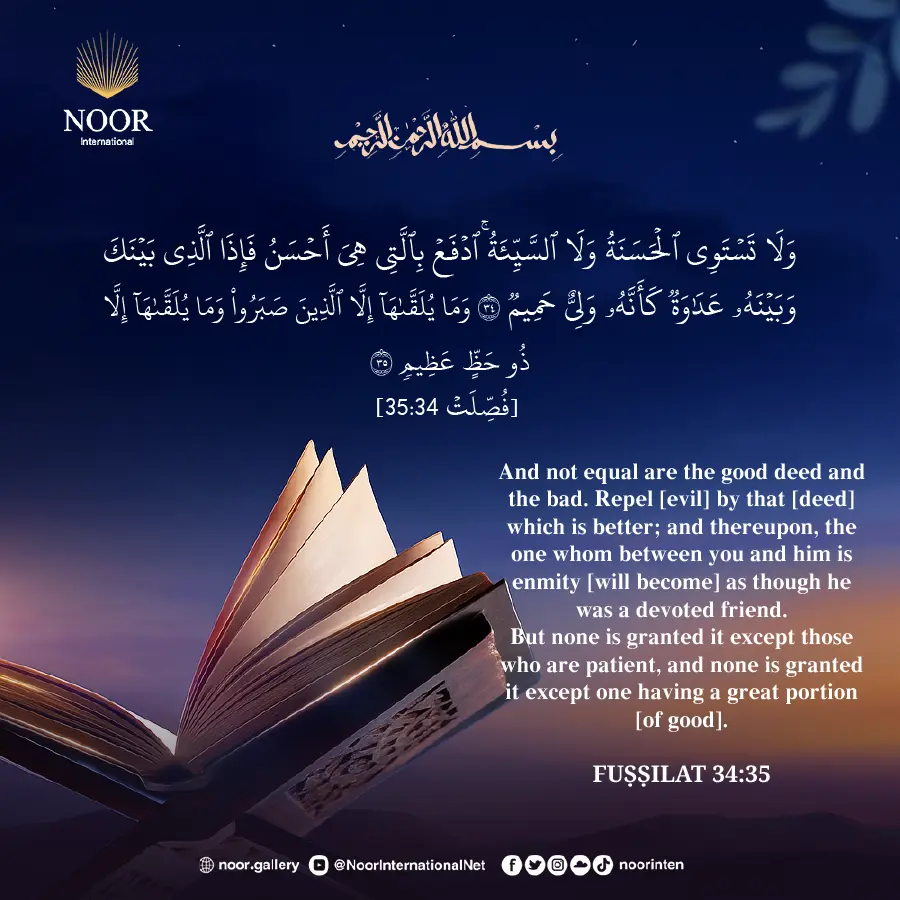
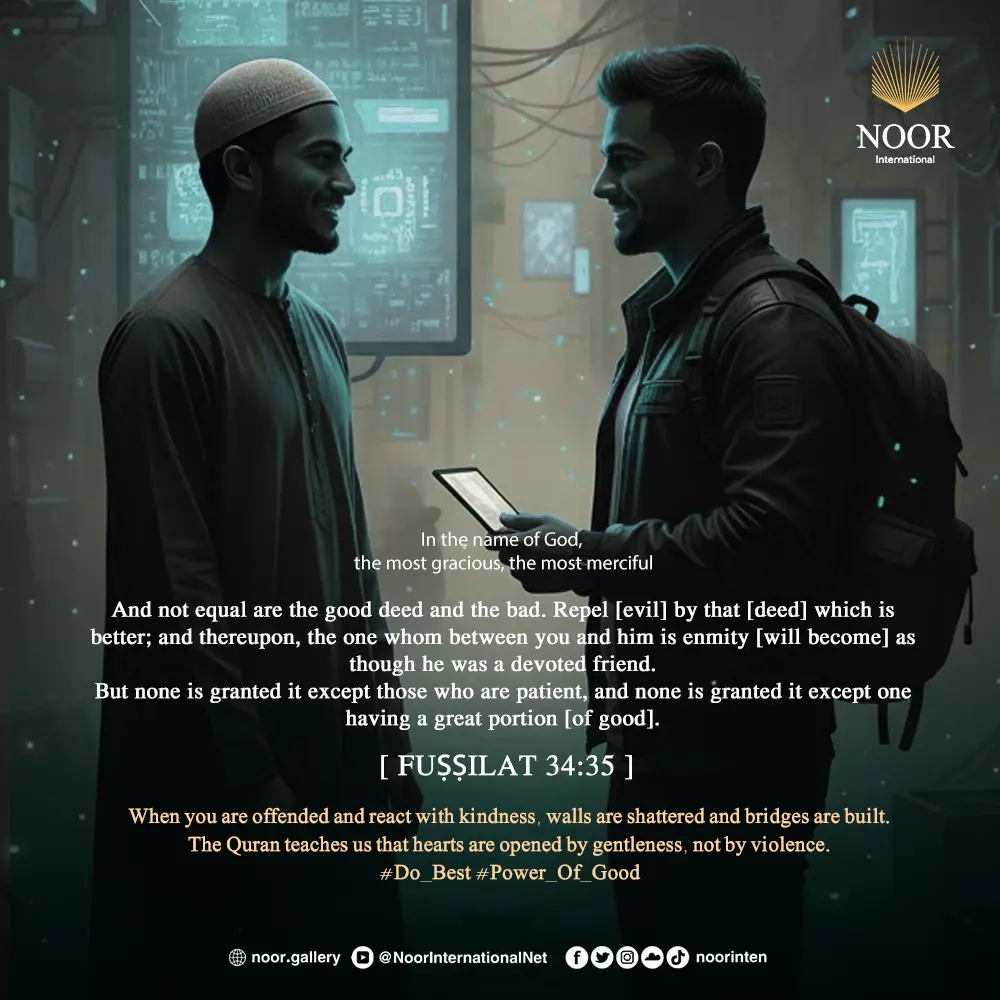
34. “And not equal are the good deed and the bad. Repel [evil] by that
[deed] which is better; and thereupon, the one whom between you
and him is enmity [will become] as though he was a devoted friend.
35. But none is granted it except those who are patient, and none is granted it except one having a great portion [of good].” (Fussilat: 34-35)
When you are offended and react with kindness, walls are shattered and bridges are built.
The Quran teaches us that hearts are opened by gentleness, not by violence.
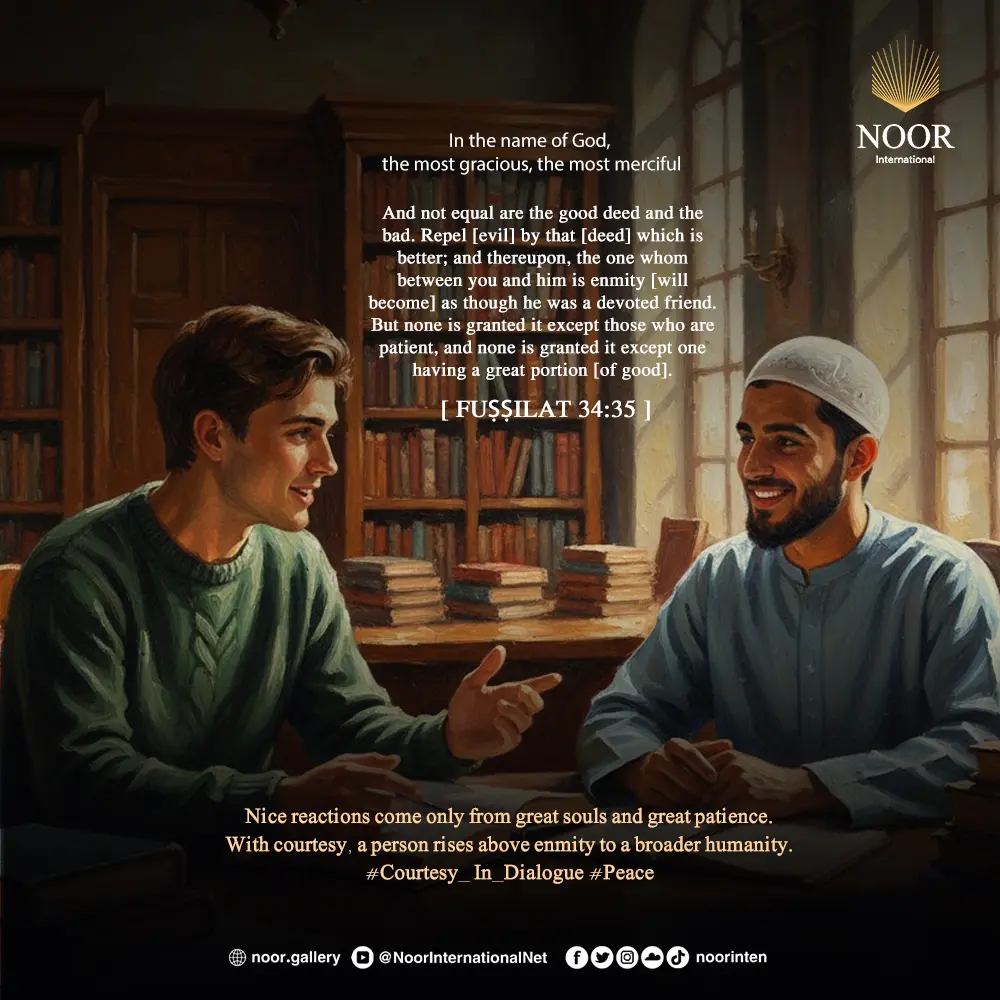
34. “And not equal are the good deed and the bad. Repel [evil] by that
[deed] which is better; and thereupon, the one whom between you
and him is enmity [will become] as though he was a devoted friend.
35. But none is granted it except those who are patient, and none is granted it except one having a great portion [of good].” (Fussilat: 34-35)
Nice reactions come only from great souls and great patience.
With courtesy, a person rises above enmity to a broader humanity.
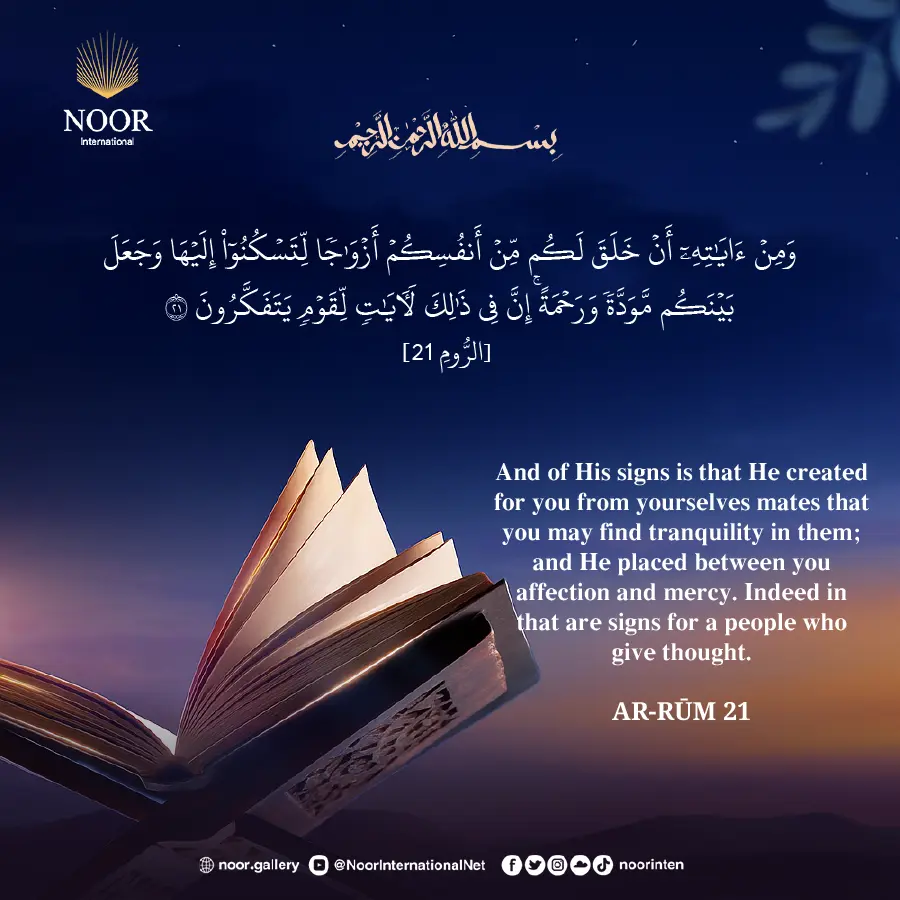
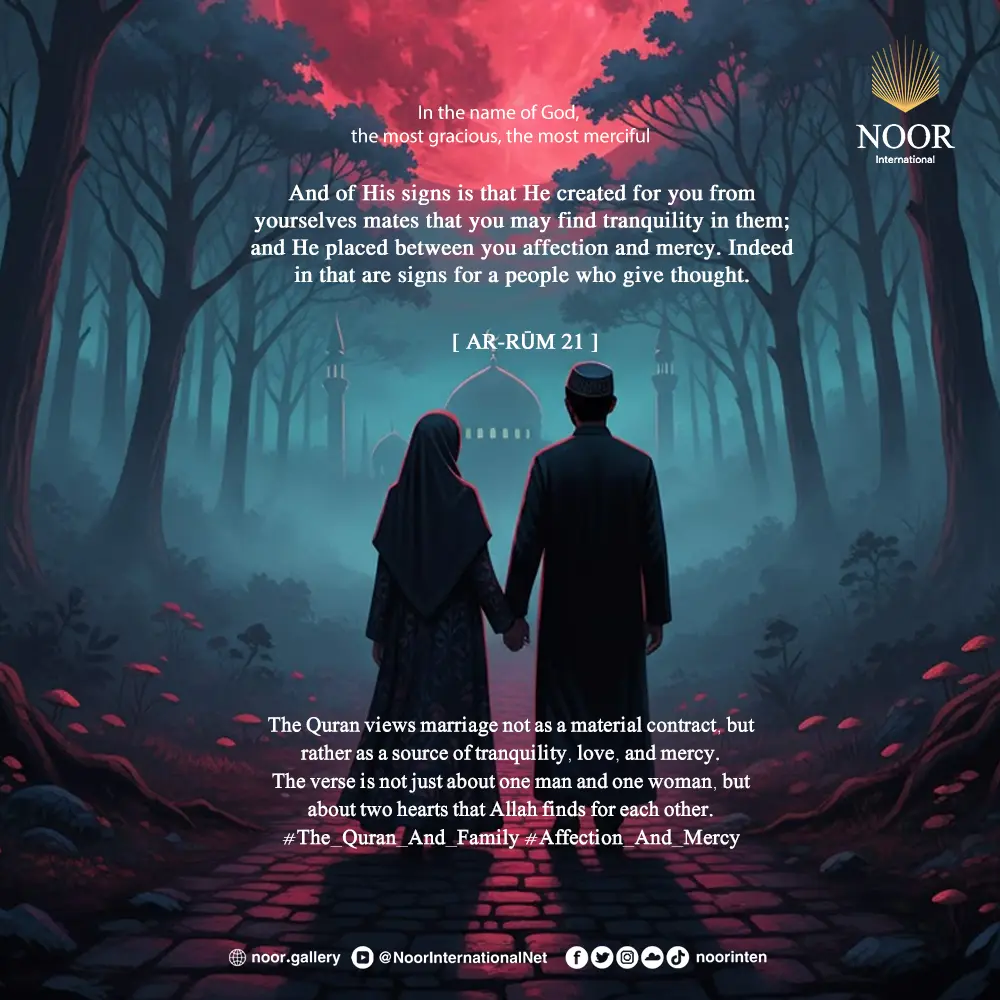
21. “And of His signs is that He created for you from yourselves mates
that you may find tranquility in them; and He placed between you affection and mercy. Indeed in that are signs for a people who give thought.”
(Ar-Rum: 21)
The Quran views marriage not as a material contract, but rather as a source of tranquility, love, and mercy.
The verse is not just about one man and one woman, but about two hearts that Allah finds for each other.
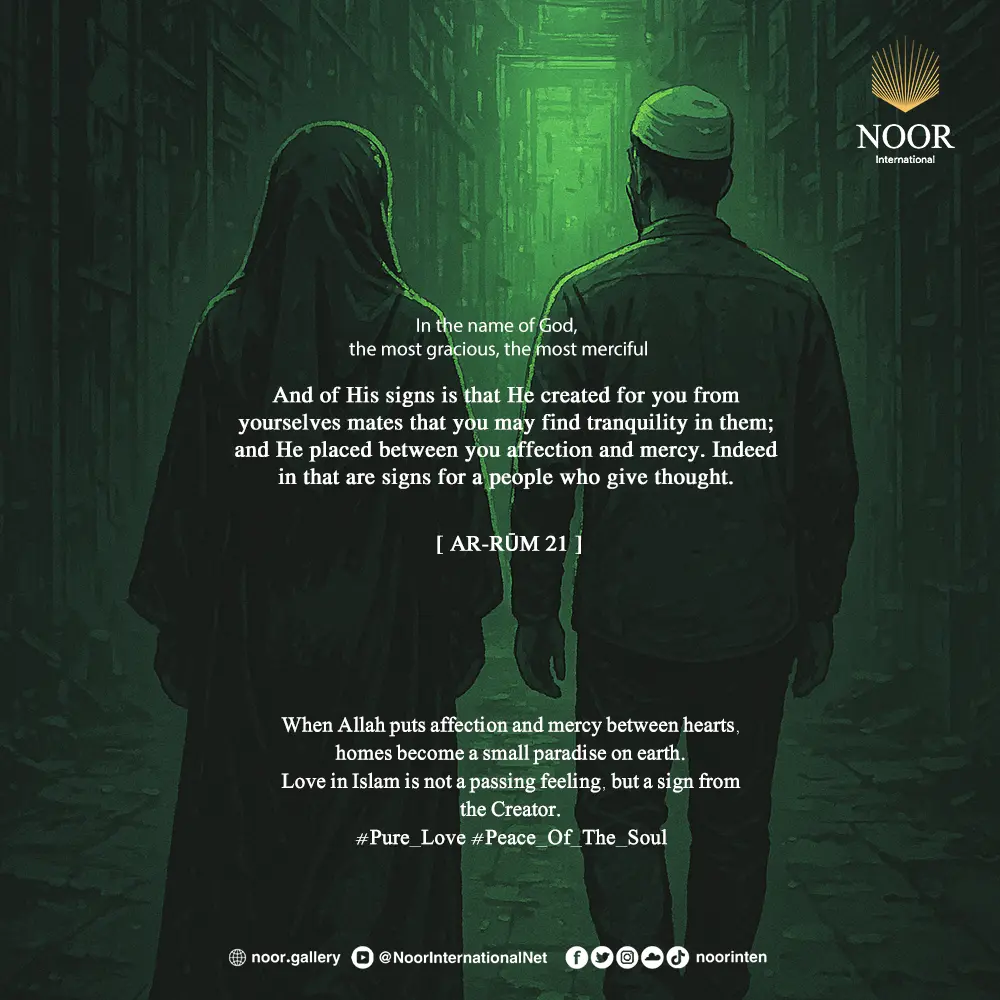
21. “And of His signs is that He created for you from yourselves mates
that you may find tranquility in them; and He placed between you affection and mercy. Indeed in that are signs for a people who give thought.”
(Ar-Rum: 21)
When Allah puts affection and mercy between hearts, homes become a small paradise on earth.
Love in Islam is not a passing feeling, but a sign from the Creator.
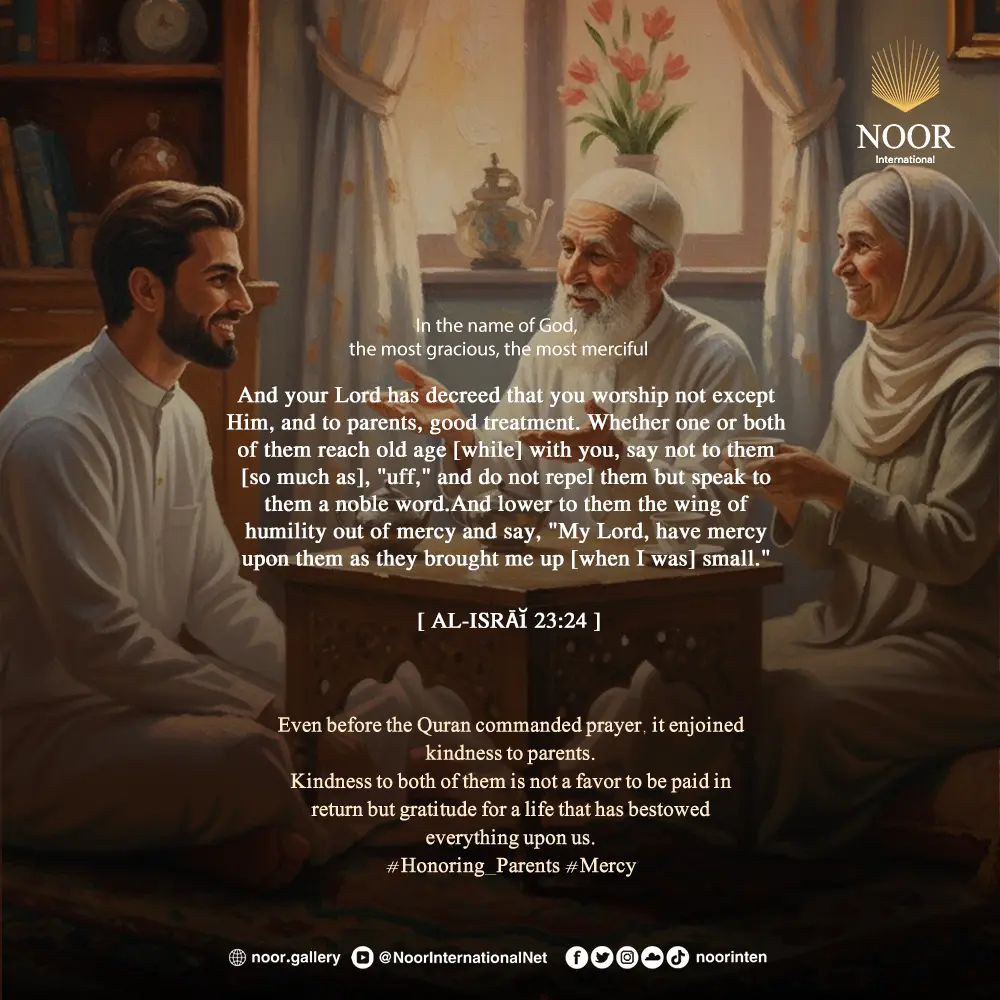
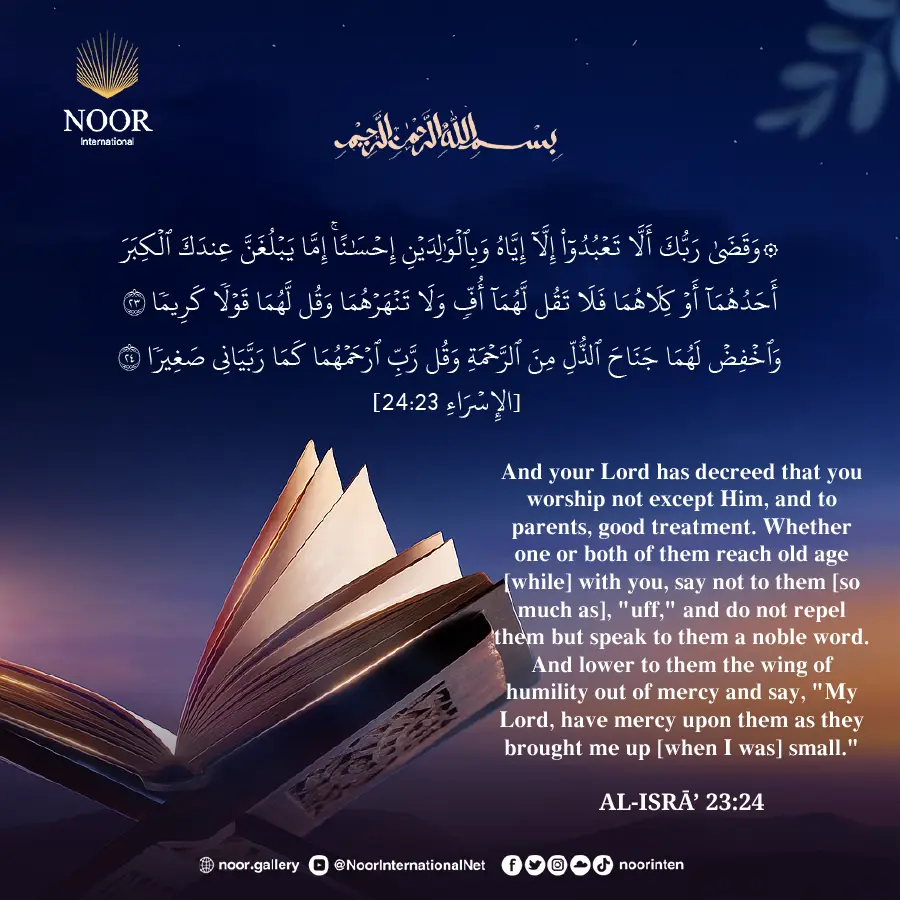
23. “And your Lord has decreed that you worship not except Him, and
to parents, good treatment. Whether one or both of them reach old
age [while] with you, say not to them [so much as], “uff,” and do not repel them but speak to them a noble word.
24. And lower to them the wing of humility out of mercy and say, “My
Lord, have mercy upon them as they brought me up [when I was] small.” (Al-Isra)
Even before the Quran commanded prayer, it enjoined kindness to parents.
Kindness to both of them is not a favor to be paid in return but gratitude for a life that has bestowed everything upon us.
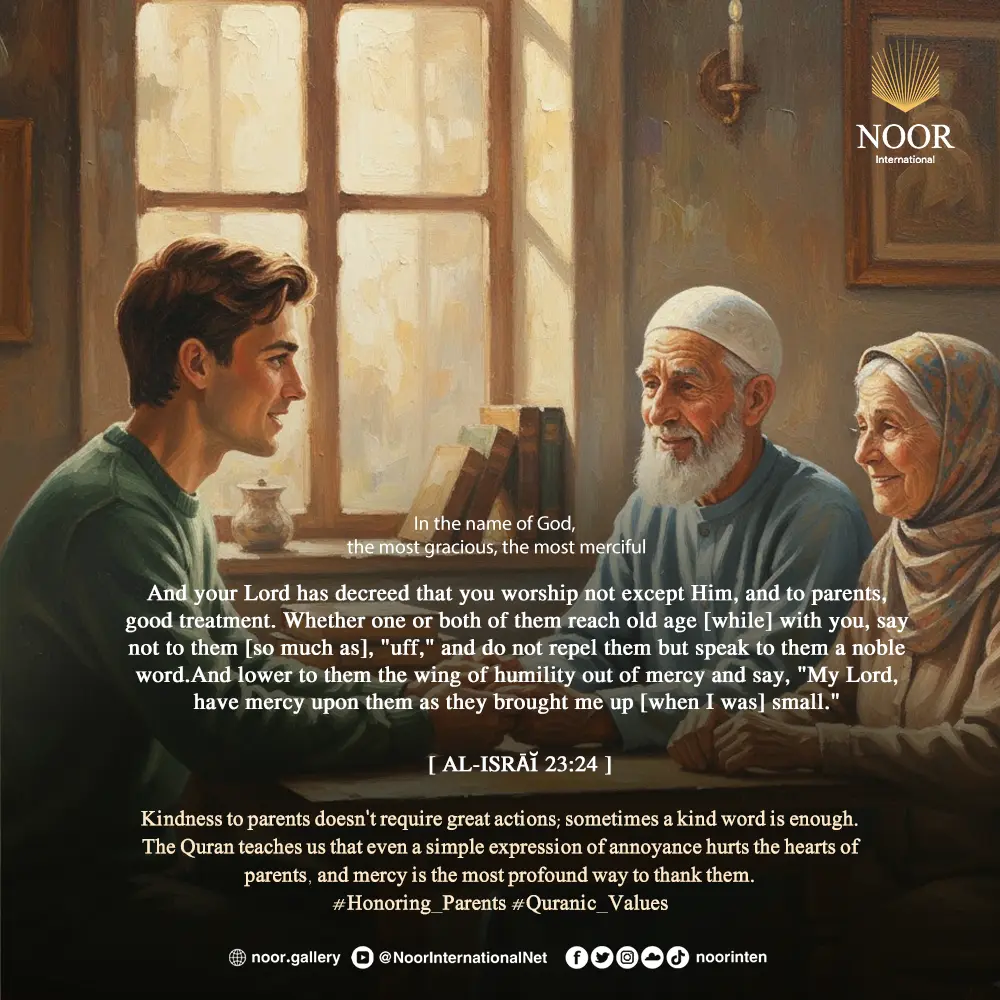
23. “And your Lord has decreed that you worship not except Him, and
to parents, good treatment. Whether one or both of them reach old
age [while] with you, say not to them [so much as], “uff,” and do not repel them but speak to them a noble word.
24. And lower to them the wing of humility out of mercy and say, “My
Lord, have mercy upon them as they brought me up [when I was] small.” (Al-Isra)
Kindness to parents doesn't require great actions; sometimes a kind word is enough.
The Quran teaches us that even a simple expression of annoyance hurts the hearts of parents, and mercy is the most profound way to thank them.